13-part series
Crested Gecko Genetics Series
The complete guide to crested gecko morph genetics, from inheritance basics through advanced breeding scenarios. Written by Dusty Mumphrey, Texas crested gecko breeder.
About this series
This 13-part series covers everything you need to know about crested gecko genetics, from understanding what a morph actually is, through the specific alleles and combinations that produce the phenotypes you see in the hobby today. Each part builds on the previous one. If you're new to genetics, start at Part 1. If you have a specific topic in mind, jump straight to it.
- 1
What Is a Crested Gecko Morph? Genetics Basics Explained
What morphs actually are, what "het" means, how inheritance patterns work, and why hobby terms differ from scientific ones. The foundation for everything else in the series.
9 min - 2
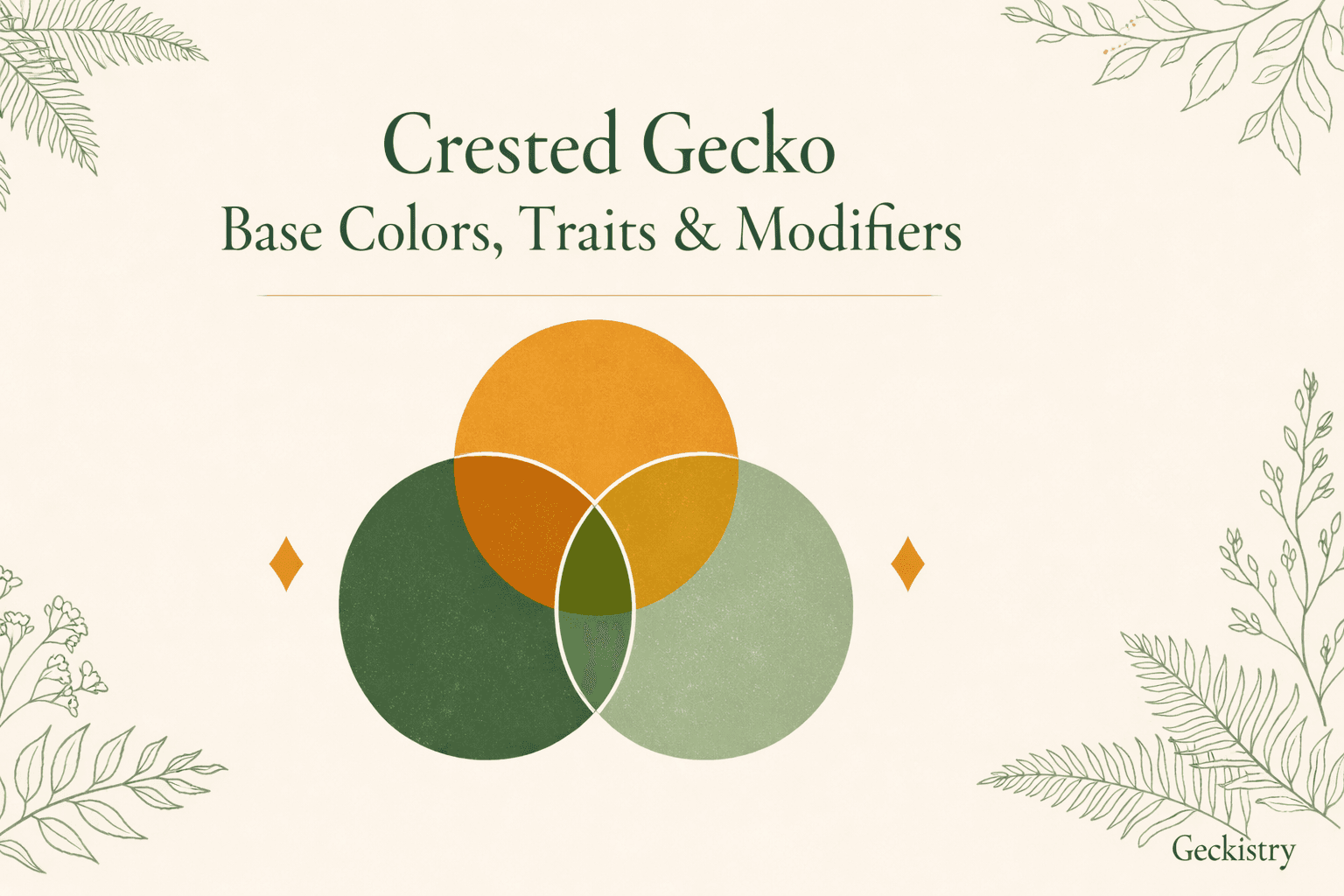
Crested Gecko Base Colors, Traits & Modifiers: The Complete Guide
The three true base colors, every pattern type (Harlequin, Pinstripe, Phantom, Tiger), and all major color modifiers (Lilly White, Cappuccino, Sable, Axanthic, Hypo) with a quick reference table.
11 min - 3
Combo Morphs vs Real Traits: What Every Crested Gecko Buyer Should Know
Lavender is not a gene. Pink is not a gene. Buckskin is not a base color. Learn which "morphs" are actually combinations, why it matters for buying and breeding, and how to use genetics data responsibly.
9 min - 4
Harlequin, Flame & Pinstripe: The Most Popular Crested Gecko Pattern Traits
Deep dive on the three most popular crested gecko pattern traits. What each looks like, how it's inherited, breeding outcomes, pricing, and how they interact with each other.
6 min - 5
Dalmatian, Phantom & Tiger: Understanding Crested Gecko Pattern Traits
Dalmatian (every gecko is unique), Phantom (it's not what you think), and Tiger (every crested gecko has it). Genetics, identification rules, breeding outcomes, and common misconceptions.
8 min - 6
Buying Your First Crested Gecko: Morphs, Pricing & What to Watch For
The practical guide to buying crested geckos. Combo morph reference, pricing breakdown by trait type, red flags to watch for, beginner FAQ, and what to ask breeders before you hand over money.
19 min - 7
Lilly White Safety Guide
Everything you need to know about Lilly White: genetics, visual characteristics, safe and unsafe pairings with Punnett squares, market value, and the ethical responsibility. Two copies kill the embryo.
11 min - 8
Sable/Cappuccino Allelic Complex
How breeding Sable to Cappuccino produced Luwak instead of Super Cappuccino, proving the first allelic complex in crested gecko genetics. Both traits, the Luwak proof, and breeding implications.
16 min - 9
Frappuccino & Sorak: Advanced Lilly White Combinations
Frappuccino (Cappuccino + Lilly White) and Sorak (Super Cappuccino + Lilly White). Stunning visuals, lethal risks. Safe pairings, unsafe pairings, and the genetics behind both.
14 min - 10
Axanthic, Phantom & Patternless
The three major recessive traits. True grayscale Axanthic, the endlessly misunderstood Phantom (it's not what you think), and how Patternless differs from Phantom despite looking similar.
17 min - 11
Hypo Forms & Epistatic Interactions: How Combo Morphs Actually Work
At least three distinct hypo forms exist. When they interact with base colors, they produce Lavender, Pink, Blonde, and C2. This is why those "morphs" aren't genes.
15 min - 12
Crested Gecko Breeding Mistakes: 6 Pitfalls That Cost Money and Lives
Lethal combinations, misunderstood allelic relationships, assuming all traits are simple, inbreeding without strategy, chasing rarity over health, and not tracking lineage. How to avoid each one.
14 min - 13
Advanced Breeding Scenarios
Three real multi-generation projects: a Frappuccino project with safety decisions at every step, a het Axanthic proof, and a polygenic Harlequin improvement project spanning 5+ years.
14 min
Start your records
Put genetics to work in your breeding program
ReptiDex tracks morphs, pedigrees, and breeding outcomes so you can apply what you learn here.
Get Started Free