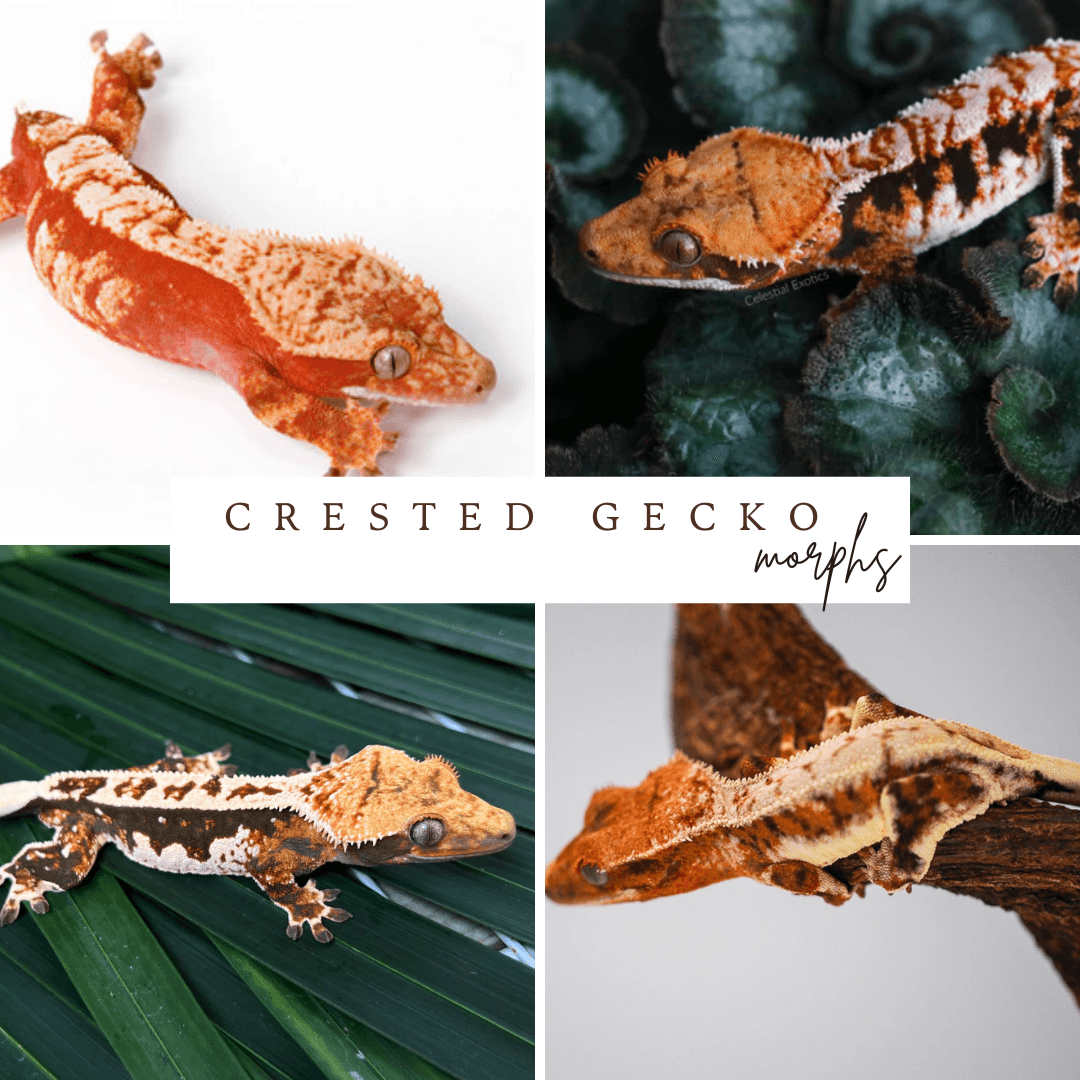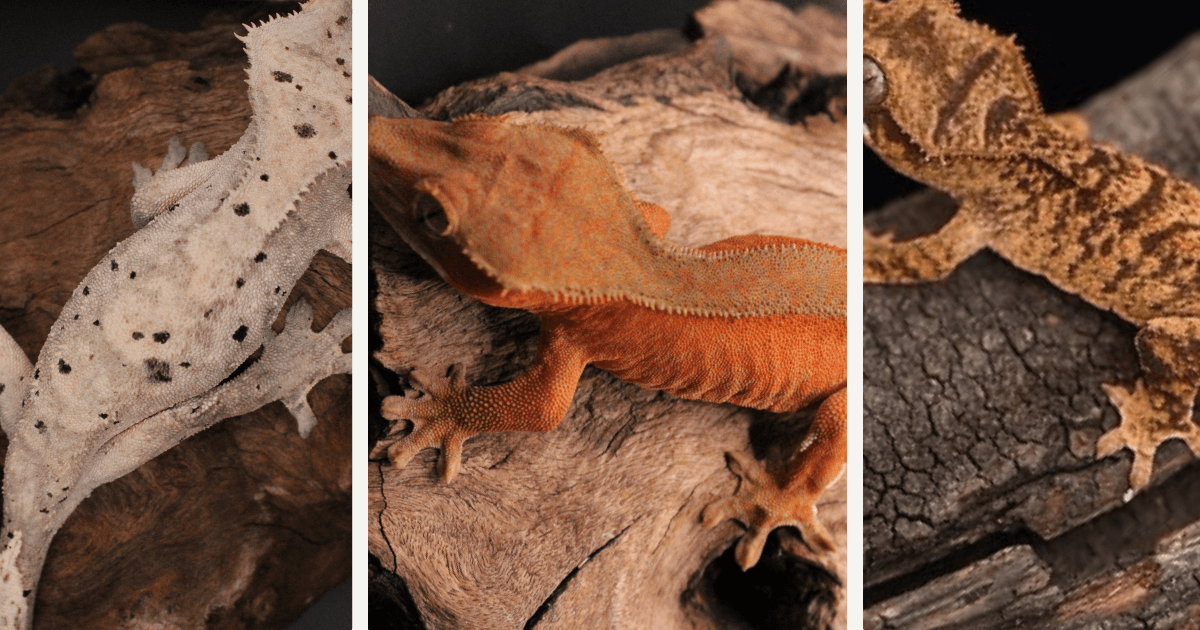
Dalmatian, Phantom & Tiger: Understanding Crested Gecko Pattern Traits
Part of the Crested Gecko Genetics Series. Last updated March 2026.
These three traits round out the essential pattern knowledge every crested gecko keeper needs. Dalmatian is one of the most fun traits in the hobby (every animal is unique), Phantom is one of the most misunderstood (it's not what you think it is), and Tiger is one of the most overlooked (every crested gecko has it). This post covers what each does, how to identify them, and what they mean for breeding.
For genetics fundamentals, see Genetics Basics Explained. For Harlequin, Flame, and Pinstripe, see the companion post.
1. Dalmatian (DAL) - Dominant with Polygenic Intensity
What It Is
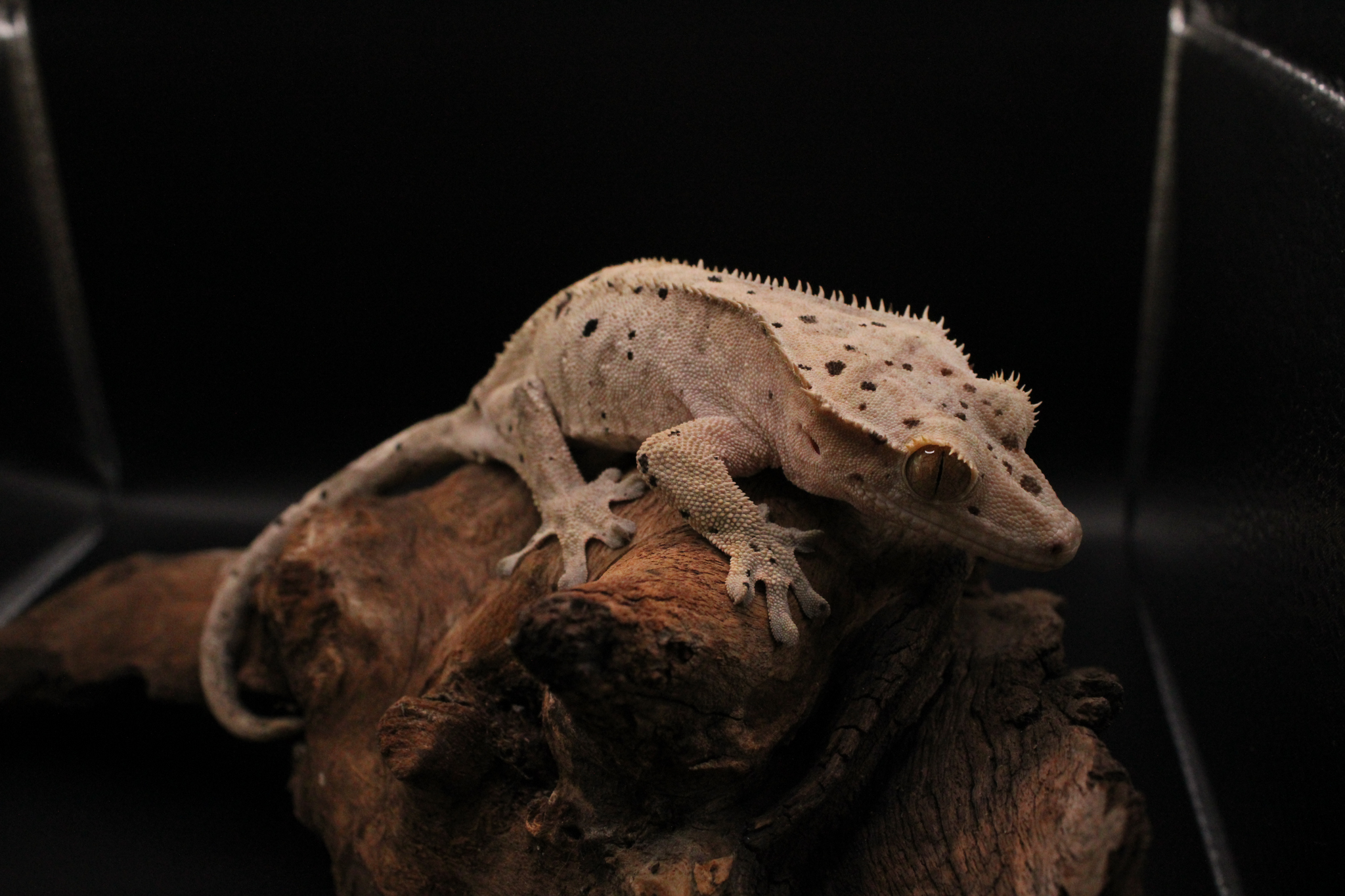
Random black or red spots scattered across body and limbs. The Dalmatian trait itself is dominant (you either have spots or you don't), but spot density is controlled by multiple genes.
GENETIC CLARIFICATION: Dalmatian demonstrates dominant inheritance with polygenic intensity:
- Dominant gene: Determines presence of spots (dominant,10+ years breeding data)
- Polygenic modifiers: Control spot number, size, and distribution
Visual Characteristics
- Random spots across body, limbs, head, sometimes tail
- Spot colors usually black, sometimes red
- Variable density: From sparse (few spots) to "Super Dalmatian" (extreme coverage)
- Unique pattern. Every Dalmatian is different.
- Combines with everything can add spots to any morph
- Spot evolution: Spots can increase with age/maturity
How It Works
Genetics: Dominant gene + polygenic intensity modifiers
Category: PATTERN_MODIFIER
Inheritance:
- Presence of spots: Dominant (predictable)
- Spot density: Polygenic (influenced by multiple genes, less predictable)
Breeding Outcomes:
- Dalmatian × Non-Dalmatian: Most offspring will have spots (dominant)
- Dalmatian × Dalmatian: Higher average spot density in offspring
- Super Dal × Super Dal: Tends toward higher spot counts, but still variable
"Super Dalmatian" Clarification: "Super Dalmatian" is NOT a genetic super form (homozygous state). It's a descriptive term for Dalmatians with:
- Very high spot counts (50+ spots)
- Result of intensive selective breeding
- Accumulation of polygenic modifiers for spotting
- Marketing term, not genetic classification
Why It's Popular
- Fun, unique appearance
- Every individual is one-of-a-kind (spot patterns vary)
- Adds visual interest to any morph
- "Super Dalmatian" is impressive and collectible
- Easy to combine with other traits
- Relatively predictable that offspring will have SOME spots
- Appeals to collectors who want unique animals
What to Expect
Availability: Common, easy to find
Price Range:
- Low-spot Dalmatian: $75-$150
- Moderate spotting: $150-$300
- Super Dalmatian: $300-$600+
- Combined with premium traits: $500-$1000+
Breeding:
- Spot presence is predictable (dominant)
- Exact spot count is NOT predictable
- Selective breeding increases average spot density over generations
Care: Standard crested gecko husbandry
2. Phantom (PH) - Recessive (Melanin-Producing)
What It Is
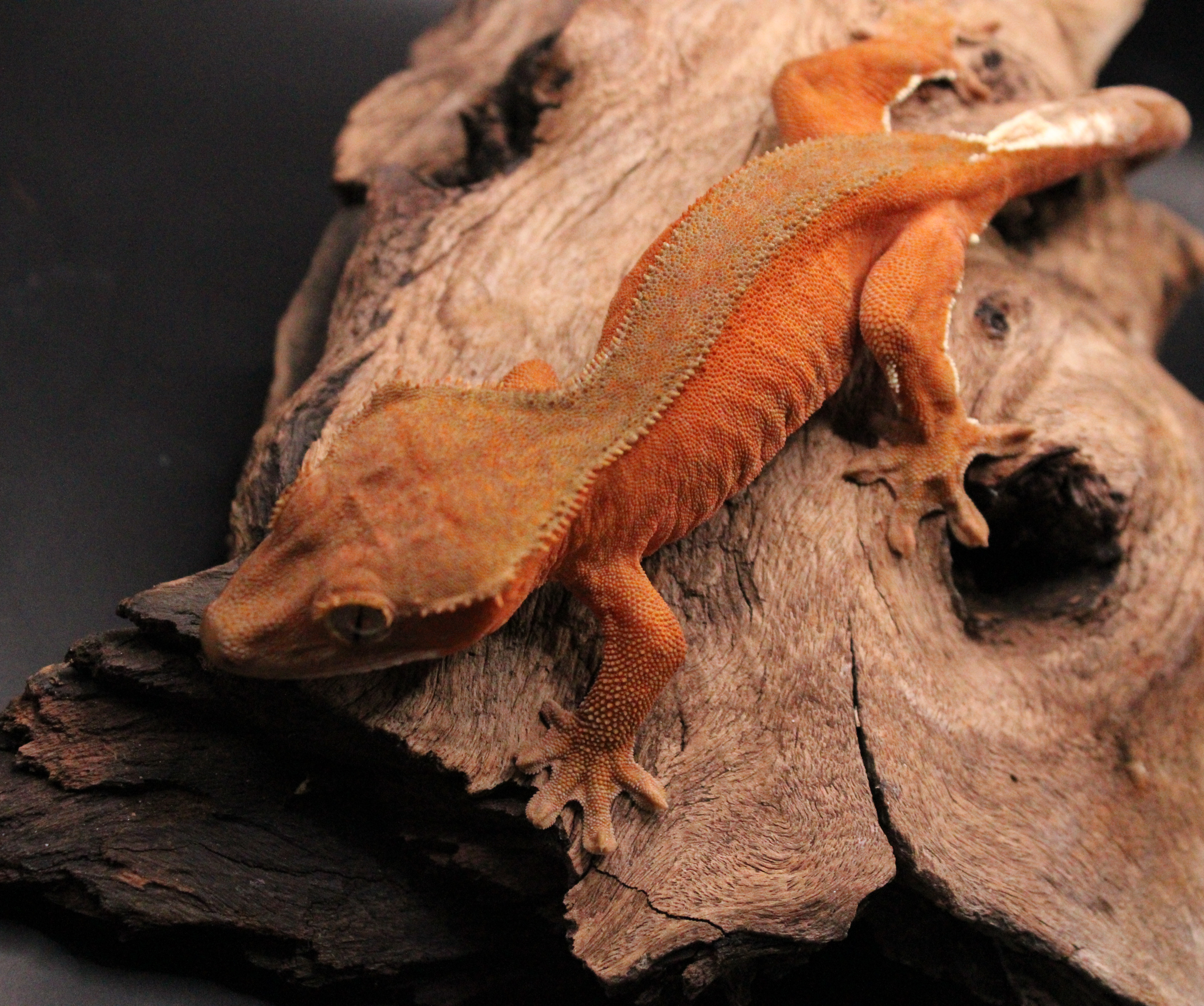
CRITICAL UNDERSTANDING: Phantom is a melanin-producing trait (NOT pattern-removing) that creates various phenotypes the hobby historically named as separate "morphs."
Phantom is ONE trait that produces:
- Bi-color (high dominance expression)
- Patternless descriptor (high dominance, solid appearance)
- Buckskin (Phantom + Yellow Base)
- Cream (Phantom phenotype)
- Tan (Phantom phenotype)
Visual Characteristics
The Phantom trait creates:
- Melanin blending with base color (key identifier)
- Pattern modification underlying pattern becomes darkened
- Range of expression: High dominance (bi-color, solid) to low dominance (subtle blending)
- Color combinations:
- Black Base + Phantom = Bi-color blacks
- Yellow Base + Phantom = Buckskin/Cream/Tan (melanin blends with yellow)
- Red Base + Phantom = Can show subtle melanin influence
How to Identify Phantom:
- Melanin blending with base color (not clean separation)
- On Yellow Base: Creates buckskin/cream/tan (NOT clean yellow like Hypo)
- With Pinstripe: White Pattern fades from tail to head
- Lower dominance: Darkened underlying pattern visible
How It Works
Genetics: Mendelian recessive (definitively proven through breeding trials)
Category: COLOR_MODIFIER and PATTERN_MODIFIER
Inheritance: Both parents must carry gene for visual offspring
Breeding Outcomes:
- Phantom × Normal: 100% Het Phantom (carriers, appear normal)
- Phantom × Het Phantom: 50% Het Phantom, 50% Visual Phantom
- Phantom × Phantom: 100% Visual Phantom
- Het × Het: 25% Normal, 50% Het Phantom, 25% Visual Phantom
Phantom vs. Hypo (CRITICAL DISTINCTION):
- Phantom: Melanin-producing → BLENDS with base color → buckskin/cream/tan
- Hypo: Melanin-reducing → CLEAN yellow/light colors → no blending
- If you see blending: Phantom
- If you see clean yellow: Hypo
Phantom vs. Patternless Trait (PTL):
- Phantom: Shows underlying darkened pattern, melanin-producing
- Patternless (PTL): Complete pattern removal, different locus
- Proof: Breeding similar animals produces different outcomes
Why It's Popular
- Creates unique "clean" or "solid" appearance
- Bi-color phenotype is striking and distinctive
- Useful for pattern modification projects
- Buckskin/cream/tan colors appeal to many keepers
- Can hide in lines as hets (breeding surprise potential)
- Combines interestingly with many traits
- Historical naming created multiple "morphs" from one trait (Bi-color, Buckskin, etc.)
What to Expect
Availability: Moderately common, especially Bi-color phenotype
Price Range:
- Phantom (standard expression): $100-$250
- High-quality Bi-color: $200-$400
- Phantom combinations (Phantom Pin, etc.): $250-$500+
Breeding:
- Recessive: Both parents must carry gene
- Het animals: Usually appear normal (carriers)
- Test breeding may be needed to prove hets
- Expression varies: Same genotype can look different based on dominance level
Care: Standard crested gecko husbandry
Common Misconception: "Bi-color" and "Buckskin" are NOT separate genes,they're phenotypes of Phantom expressing differently based on base color and dominance level.
3. Tiger (TIG) - Fixed Universal Trait
What It Is
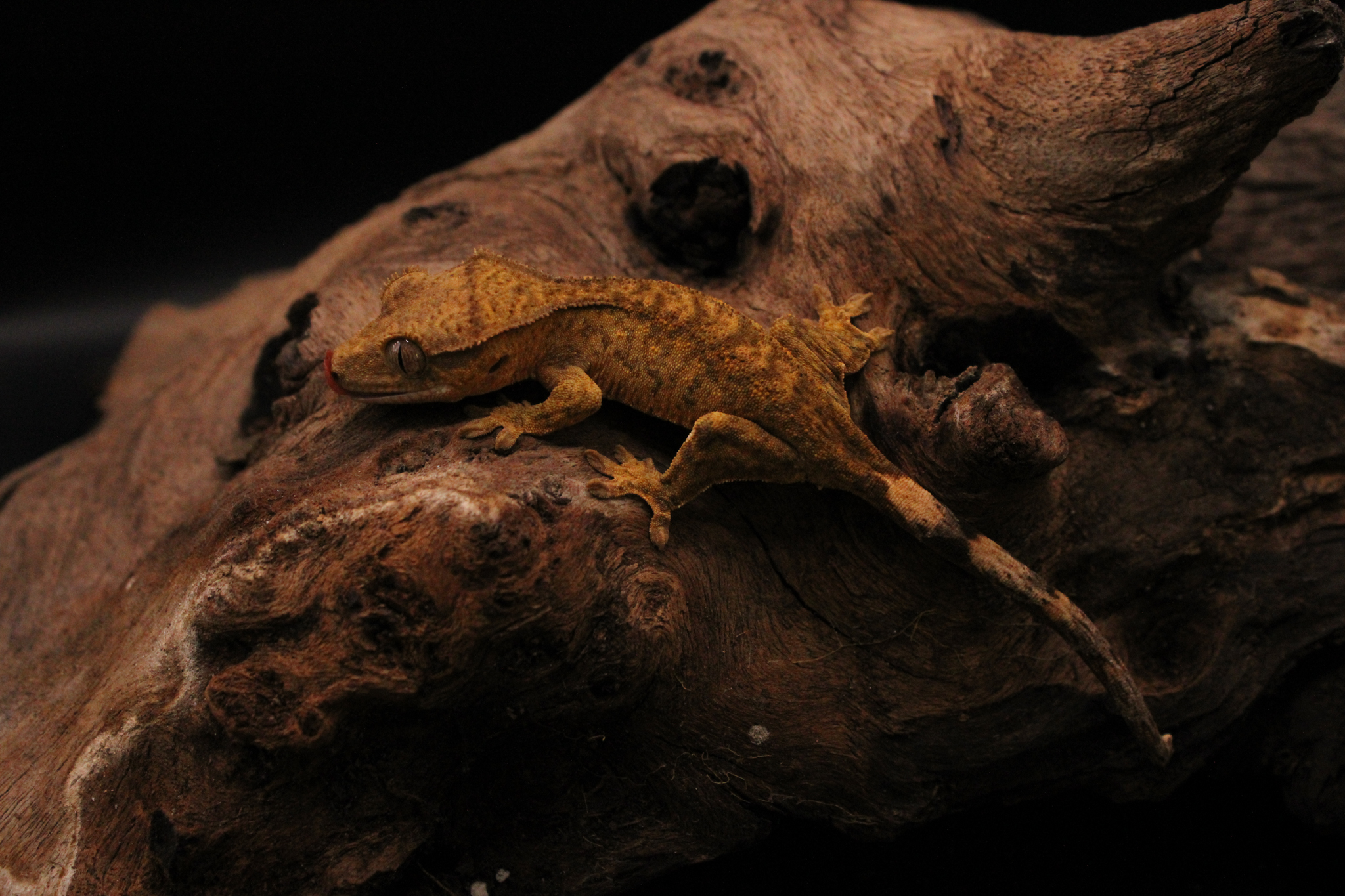
CRITICAL UNDERSTANDING: Tiger is NOT a morph you breed for. It's a fixed dominant trait present in ALL crested geckos. What we see as "Tiger" pattern is actually high Tiger expression influenced by other pattern modifiers.
Tiger provides the foundational pattern structure that other traits modify. What breeders call "Tiger morphs" are animals where Tiger expression is:
- More visible/pronounced
- Less modified by other pattern traits
- Intensified through selective breeding
Visual Characteristics
- Vertical striping perpendicular to spine
- Variable expression: Bold and pronounced in some animals, subtle in others
- Full-body potential: Can extend to limbs and tail
- Pattern foundation: All pattern expression builds on Tiger structure
Pattern Variants (Tiger Interactions):
- Marble: Tiger variant with thicker bands spaced further apart
- Reverse Pin: Tiger + Pinstripe interaction creating unique appearance
- Brindle: Tiger + Pinning interaction creating broken/fragmented striping
How It Works
Genetics: Fixed dominant. Present in all Correlophus ciliatus
Category: PATTERN_MODIFIER (universal/fixed)
What This Means:
- You cannot "breed for" Tiger (all animals have it)
- What varies is Tiger expression level
- Other traits modify how Tiger is displayed
- Selective breeding for "Tiger morphs" is actually selecting for:
- High Tiger expression
- Minimal interference from other pattern traits
- Clean vertical striping appearance
Why Some Animals Show It More:
- Polygenic modifiers affect Tiger expression intensity
- Other pattern traits (Harlequin, Flame) can mask Tiger
- Patternless or reduced pattern allows Tiger to show through
- Selective breeding intensifies visible Tiger expression
Why It's Popular
- Striking, bold pattern when highly expressed
- Easy to identify at a glance
- Often affordable compared to other pattern expressions
- Unique alternative to Harlequin/Flame patterns
- Combines well with Dalmatian and other traits
- "Clean" appearance appeals to minimalist aesthetics
What to Expect
Availability: Common (technically all geckos have Tiger)
Price Range: $50-$250 depending on Tiger expression clarity and color
Breeding:
- All offspring will have Tiger (it's fixed)
- Tiger expression level varies and is influenced by polygenic factors
- Selective breeding for high expression over generations improves consistency
Care: Standard crested gecko husbandry
Understanding "Brindle": Brindle is NOT a separate trait. It's Tiger + Pinning interaction. The Pinning effect (tight pinstripes breaking up pattern) interacts with Tiger structure to create broken, irregular vertical striping.
Breeding Expectations for These Traits
**Dalmatian (Dom...