Care guide
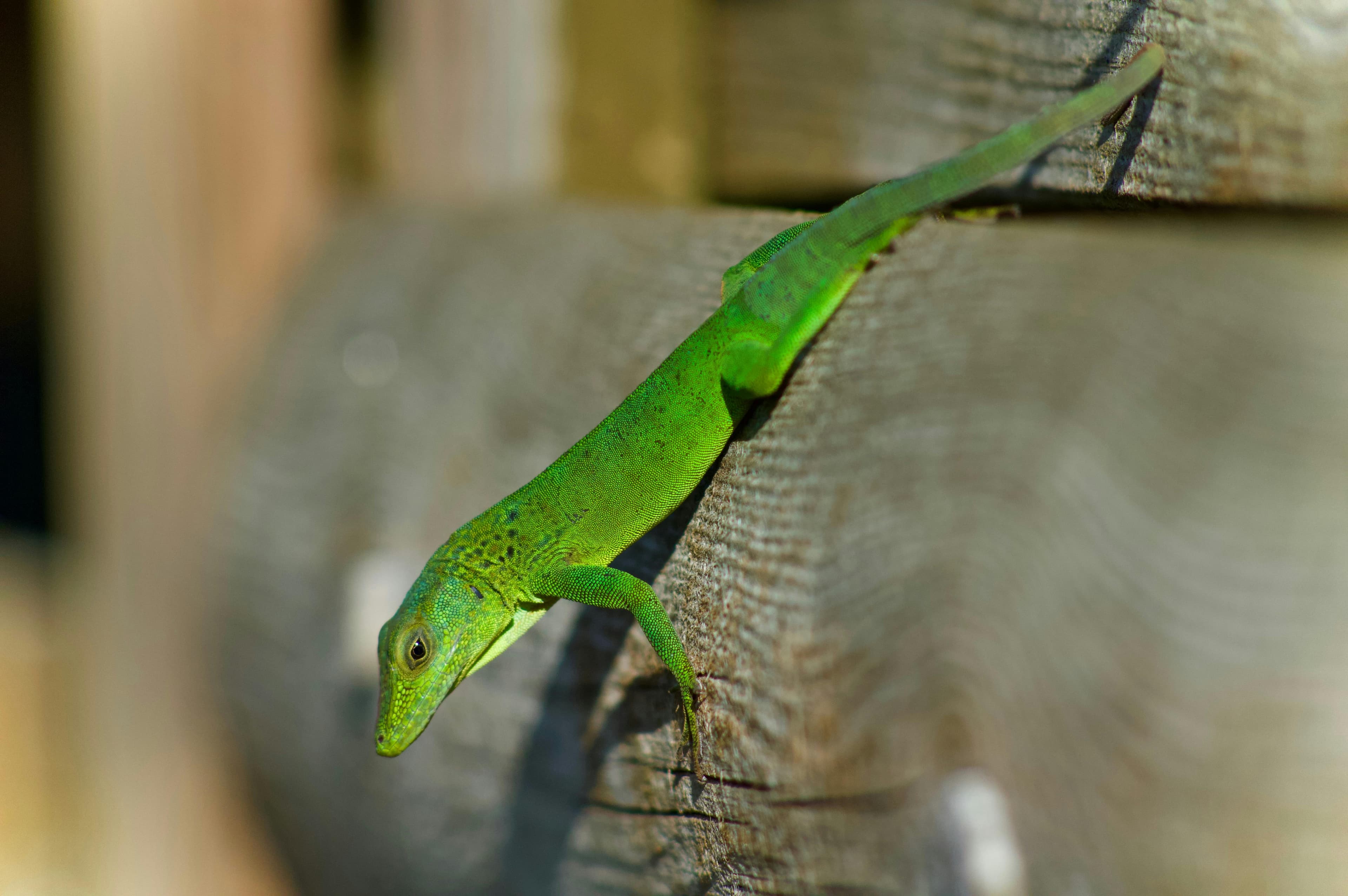
Green Anole
Anolis carolinensis
- Adult size
- 5-8 inches (13-20 cm)
- Lifespan
- 4-8 years
Overview
Green anoles are small, arboreal lizards native to the southeastern United States. Known as "American chameleons" for their ability to change color from bright green to brown, they are active, entertaining lizards. While affordable and common, they have specific care requirements and are better suited for observation than handling.
Ambient Temp
75-80°F (24-27°C)
Basking Spot
85-90°F (29-32°C)
Night Temp
65-75°F (18-24°C)
Humidity
60-70%
UVB
Required: 5.0 UVB covering enclosure; replace every 6-12 months
Lifespan
4-8 years
Enclosure Sizes by Life Stage
| Life Stage | Minimum Enclosure Size |
|---|---|
| Hatchling0–3 months | 10-gallon (20x10x12") |
| Juvenile3–12 months | 20-gallon tall (24x12x24") |
| Adult12+ months | 20-gallon tall or 18x18x24" for a pair |
Housing
- Enclosure type
- Vertical screen enclosure; arboreal species requires height and cross-ventilation
- Substrate
- Coconut fiber, moss, or bioactive substrate. Live plants help maintain humidity.
- Hides
- Dense foliage and branches for cover; they hide within plants rather than in traditional hides
- Notes
- Minimum 10-gallon vertical for one anole (larger better). Add 5 gallons per additional anole. Provide vertical branches, live plants, and climbing areas. Screen top essential for ventilation.
Temperature
- Ambient / cool side
- 75-80°F (24-27°C)
- Basking spot
- 85-90°F (29-32°C)
- Nighttime
- 65-75°F (18-24°C)
- Heating method
- Small basking bulb; ambient temperatures often sufficient
Humidity & Lighting
- Humidity range
- 60-70%
- Maintenance
- Mist enclosure 2-3 times daily. They drink droplets from leaves. Good ventilation prevents mold.
- UVB
- Required: 5.0 UVB covering enclosure; replace every 6-12 months
- Photoperiod
- 12-14 hours on / 10-12 hours off
- Lighting notes
- REQUIRES UVB 5.0 covering enclosure. Replace every 6-12 months. They are diurnal and need UVB for calcium metabolism.
Feeding
- Staple food
- Crickets, fruit flies, small dubia roaches
- Variety
- Small waxworms occasionally; all prey must be smaller than the space between their eyes
- Frequency
- Feed daily for juveniles and adults. Offer 2-3 appropriately sized insects per feeding.
- Supplements
- Dust insects with calcium with D3 every other feeding and multivitamin once per week.
- Notes
- Insectivore: Feed crickets, fruit flies, small dubia roaches, and occasional waxworms. Prey should be smaller than the space between their eyes.
Water & Hydration
- Water bowl
- No standing dish; primary hydration from misted droplets on leaves and enclosure walls
- Notes
- Mist heavily 2-3x daily. They rarely drink from dishes - they lap water droplets from leaves. Provide humid environment.
Handling
- Disposition
- Display species; easily stressed by handling; fragile skin and detachable tail
- Recommendations
- NOT ideal for handling. They are fast, fragile, and easily stressed. Their tails detach easily and skin is delicate. Best as display animals. Handle minimally if necessary.
Common Health Issues
Dehydration (very common), MBD, respiratory infections, mouth rot, and stress from improper care or handling.
Special Notes
Green anoles can live 4-8 years with proper care (often live less due to inadequate care). Males have large pink dewlaps used in territorial displays and mating. Males are territorial and should not be housed together. Color change indicates mood and temperature regulation, not camouflage. They are inexpensive but their care requirements are often underestimated. Require daily misting and high humidity - not a low-maintenance pet despite common perception.
Next steps
Start your records
Track your Green Anole with ReptiDex
Track your breeding program, generate pedigrees, and share records with buyers.
Get Started Free