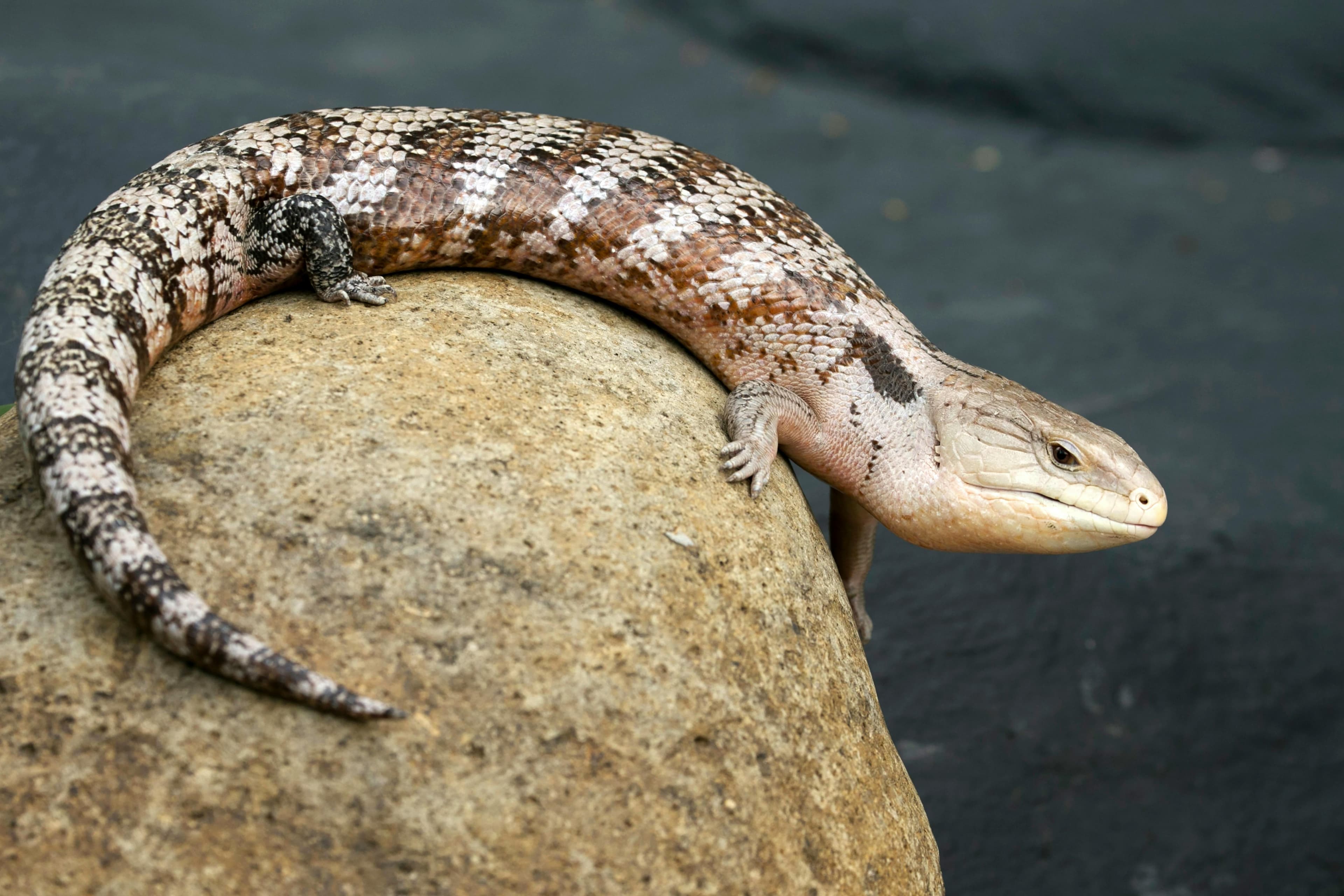
Care guide
Blue-Tongued Skink
Tiliqua scincoides
- Adult size
- 18-24 inches (45-61 cm)
- Lifespan
- 15-20 years
Overview
Blue-tongued skinks are large, heavy-bodied lizards from Australia and Indonesia, famous for their bright blue tongue used in defensive displays. They are known for their dog-like personalities, intelligence, and ability to recognize their owners. Their slow movements and calm temperament make them excellent pets.
Ambient Temp
70-80°F (21-27°C)
Basking Spot
95-105°F (35-41°C)
Night Temp
65-75°F (18-24°C)
Humidity
40-50% for Northern species; 60-70% for Indonesian species
UVB
Required: 5.0-10.0 UVB tube covering 2/3 of enclosure; replace every 6-12 months
Lifespan
15-20 years
Enclosure Sizes by Life Stage
| Life Stage | Minimum Enclosure Size |
|---|---|
| Hatchling0–3 months | 20-gallon long (30x12x12") |
| Juvenile3–12 months | 40-gallon breeder (48x18x18") |
| Adult12+ months | 120-gallon or 4x2x2 ft (minimum 4x2 footprint) |
Housing
- Enclosure type
- Terrestrial glass or PVC enclosure; ground-dwelling species needs floor space over height
- Substrate
- Cypress mulch, coconut husk, or soil mix. Provide 2-3 inches for burrowing. Avoid pine, cedar, and sand. Paper towels for quarantine.
- Hides
- Multiple hides; warm and cool side; burrowing areas
- Notes
- Minimum 4x2x2 feet (120-gallon equivalent) for adults. Provide multiple hides, basking area, shallow water dish, and open space. They are ground-dwellers and need more floor space than height.
Temperature
- Ambient / cool side
- 70-80°F (21-27°C)
- Basking spot
- 95-105°F (35-41°C)
- Nighttime
- 65-75°F (18-24°C)
- Heating method
- Basking bulb and thermostat; provide temperature gradient
Humidity & Lighting
- Humidity range
- 40-50% for Northern species; 60-70% for Indonesian species
- Maintenance
- Mist enclosure lightly 2-3x per week depending on species. Northern species tolerate lower humidity.
- UVB
- Required: 5.0-10.0 UVB tube covering 2/3 of enclosure; replace every 6-12 months
- Photoperiod
- 12 hours on / 12 hours off
- Lighting notes
- REQUIRES UVB 5.0-10.0 tube bulb covering 2/3 of enclosure. Replace every 6-12 months. Some keepers debate necessity but most recommend it.
Feeding
- Staple food
- 60% vegetables/greens (collard, squash, berries); 40% protein (ground turkey, canned dog food, snails, dubia roaches)
- Variety
- Variety is key; rotate proteins and vegetables regularly
- Frequency
- Juveniles: every other day. Adults: 2-3 times per week. They are prone to obesity so do not overfeed.
- Supplements
- Dust food with calcium with D3 2x per week and multivitamin 1x per week if feeding fresh food.
- Notes
- Omnivore: 60% vegetables/greens, 40% protein. Feed collard greens, squash, berries, ground turkey, canned dog food, snails, dubia roaches. Variety is key.
Water & Hydration
- Water bowl
- Large shallow water dish for drinking and soaking; change daily
- Notes
- Provide large shallow water dish for drinking and soaking. Change daily. They may defecate in water.
Handling
- Disposition
- Generally very docile; intelligent; can recognize owners; respect the blue tongue warning display
- Recommendations
- Generally very docile. Handle 2-3 times per week once settled. Support the entire body. They have strong jaws and may bite if threatened - respect the blue tongue warning display.
Common Health Issues
Obesity, metabolic bone disease, respiratory infections, mouth rot, and parasites. Generally hardy if care is proper.
Special Notes
Blue-tongued skinks can live 15-20 years. Multiple species exist with different care requirements - Northern (Indonesian) need higher humidity. They give birth to live young. Their blue tongue is a startle defense. Highly intelligent and can learn to recognize feeding times and owners. They may vocalize (hiss) when defensive. Prone to obesity - monitor weight carefully.
Next steps
Start your records
Track your Blue-Tongued Skink with ReptiDex
Track your breeding program, generate pedigrees, and share records with buyers.
Get Started Free