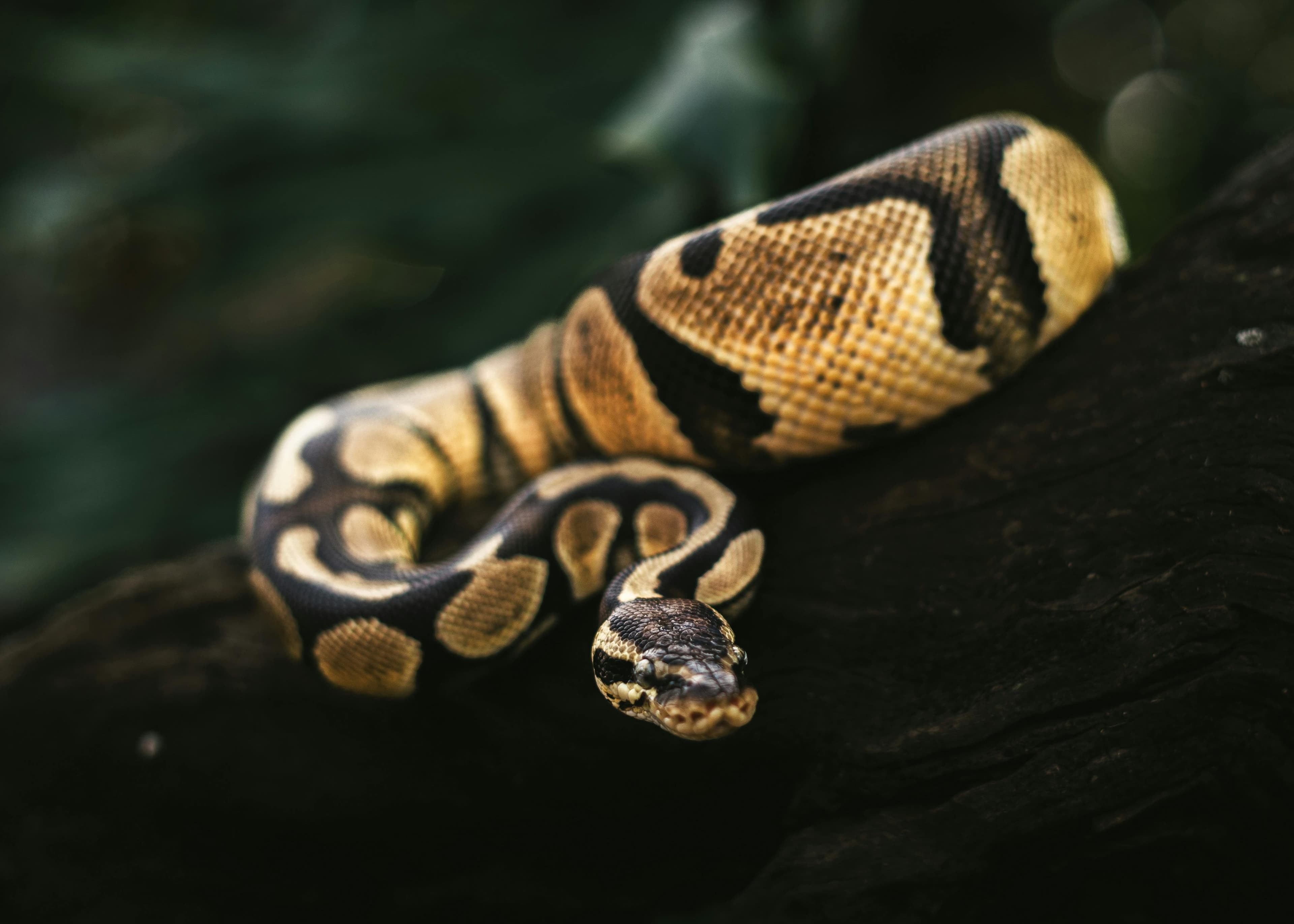
Care guide
Ball Python
Python regius
- Adult size
- 3-5 feet (0.9-1.5 m)
- Lifespan
- 20-30 years
Ball Python Morph Guide available
Browse alleles, named morphs, and combo morph combinations
Ball Python genetics calculator available
Predict offspring morph probabilities across multiple traits simultaneously
Overview
Ball pythons are one of the most popular pet snakes, native to West and Central Africa. They are known for their docile temperament, manageable size (3-5 feet), and incredible variety of color morphs. Their defensive behavior of curling into a tight ball gives them their common name.
Ambient Temp
78-80°F (26-27°C)
Basking Spot
88-92°F (31-33°C)
Night Temp
75-80°F (24-27°C)
Humidity
50-60%
UVB
Not required; 12-hour day/night cycle with ambient lighting
Lifespan
20-30 years
Enclosure Sizes by Life Stage
| Life Stage | Minimum Enclosure Size |
|---|---|
| Hatchling0–3 months | 10-gallon (20x10x12") or similar tub |
| Juvenile3–12 months | 20-40-gallon (36x18x18") |
| Adult12+ months | 4x2x2 ft (120x60x60 cm) or larger |
Housing
- Enclosure type
- Terrestrial PVC or wood enclosure; glass tanks lose heat and humidity
- Substrate
- Cypress mulch, coconut husk, or aspen shavings. Paper towels or newspaper for juveniles or quarantine. Avoid cedar and pine.
- Hides
- At least two hides: warm side and cool side; snug-fitting hides reduce stress
- Notes
- Minimum 40-gallon enclosure for adults (4x2x2 feet preferred). Provide at least two hides (warm and cool), climbing branches, and secure locking lid. PVC or wood enclosures retain heat and humidity better than glass.
Temperature
- Ambient / cool side
- 78-80°F (26-27°C)
- Basking spot
- 88-92°F (31-33°C)
- Nighttime
- 75-80°F (24-27°C)
- Heating method
- Heat pad, heat tape, or ceramic heat emitter with thermostat
Humidity & Lighting
- Humidity range
- 50-60%
- Maintenance
- Use a hygrometer to monitor. Mist enclosure or add humid hide with damp sphagnum moss. Increase to 65-70% during shed.
- UVB
- Not required; 12-hour day/night cycle with ambient lighting
- Photoperiod
- 12 hours on / 12 hours off
- Lighting notes
- No UVB required. Provide day/night cycle with ambient lighting (12 hours on, 12 hours off).
Feeding
- Staple food
- Frozen-thawed mice (hatchlings) or rats (adults)
- Variety
- No live prey; size prey to approximately the same width as the snake's widest point
- Frequency
- Hatchlings: every 5-7 days. Juveniles: every 7 days. Adults: every 10-14 days.
- Supplements
- No supplements needed if feeding whole prey items.
- Notes
- Carnivore: Feed appropriately-sized frozen-thawed rodents (mice for babies, rats for adults). Never feed live prey.
Water & Hydration
- Water bowl
- Large bowl for drinking and soaking; change every 2-3 days
- Notes
- Provide large water bowl for drinking and soaking. Change water every 2-3 days or when soiled. Ball pythons may soak before shedding.
Handling
- Disposition
- Very docile; excellent beginner snake; may curl into ball when nervous
- Recommendations
- Handle 1-2 times per week for 10-15 minutes. Avoid handling for 48 hours after feeding. Support the snake's body fully and never grab or restrain the head.
Common Health Issues
Respiratory infections (from low temps/humidity), scale rot (from wet substrate), mites, inclusion body disease (IBD), and obesity from overfeeding.
Special Notes
Ball pythons can live 20-30 years. They are notorious for going off feed, especially during breeding season (winter). A ball python may fast for weeks or months and still be healthy. Check temps, humidity, and husbandry first. Handle hatchlings gently as they may be defensive initially but calm with age.
Next steps
- Open the genetics calculatorPredict offspring morph probabilities across every trait at once.
- Build a pedigreeGenerate multi-generation pedigrees your buyers can trust.
- Import your spreadsheetBring an existing collection into ReptiDex from a spreadsheet.
- See how records follow the animalEvery record you keep travels with the animal when it changes hands.
Start your records
Track your Ball Python with ReptiDex
Track your breeding program, generate pedigrees, and share records with buyers.
Get Started Free