Care guide
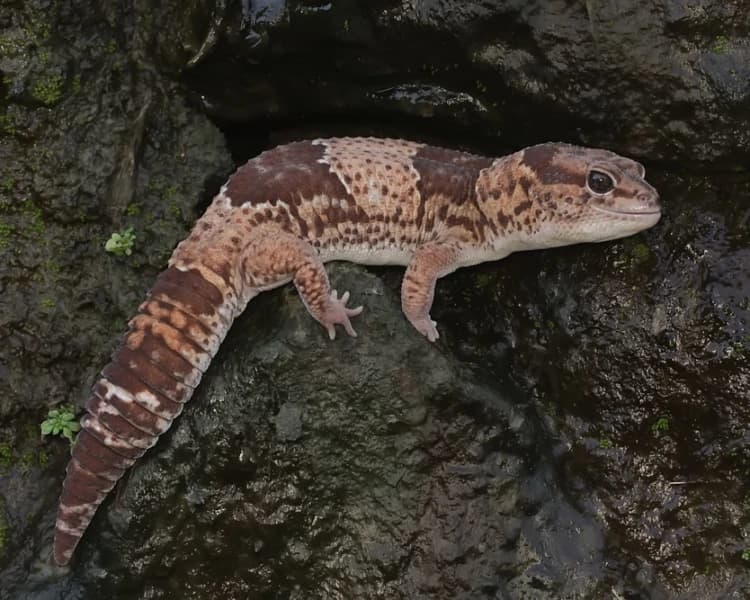
African Fat-Tailed Gecko
Hemitheconyx caudicinctus
- Adult size
- 7-9 inches (18-23 cm)
- Lifespan
- 15-25 years
Overview
African fat-tailed geckos are terrestrial lizards from West Africa, closely related to leopard geckos but requiring slightly different care. They are known for their stocky build, prominent fat-storing tail, and calm demeanor.
Ambient Temp
75-80°F (24-27°C)
Basking Spot
90-95°F (32-35°C)
Night Temp
70-75°F (21-24°C)
Humidity
50-70%
UVB
Not required; optional 2-5% UVB beneficial
Lifespan
15-25 years
Enclosure Sizes by Life Stage
| Life Stage | Minimum Enclosure Size |
|---|---|
| Hatchling0–3 months | 10-gallon (20x10x12") |
| Juvenile3–12 months | 20-gallon long (30x12x12") |
| Adult12+ months | 30-40-gallon long (36-48x12x12") |
Housing
- Enclosure type
- Terrestrial glass or PVC enclosure with secure lid and ventilation
- Substrate
- Paper towels, reptile carpet, or tile recommended. Can use coconut fiber for adults but monitor for ingestion.
- Hides
- Three hides: warm hide, cool hide, and moist hide with damp sphagnum moss
- Notes
- Minimum 20-gallon long tank for adults. Provide warm hide, cool hide, and moist hide. Add decorations like cork bark and artificial plants for security.
Temperature
- Ambient / cool side
- 75-80°F (24-27°C)
- Basking spot
- 90-95°F (32-35°C)
- Nighttime
- 70-75°F (21-24°C)
- Heating method
- Under-tank heater with thermostat
Humidity & Lighting
- Humidity range
- 50-70%
- Maintenance
- Mist enclosure lightly 2-3 times per week. Maintain moist hide with damp sphagnum moss.
- UVB
- Not required; optional 2-5% UVB beneficial
- Photoperiod
- 12-14 hours on / 10-12 hours off
- Lighting notes
- No UVB required but low-level UVB (2-5%) can be beneficial. Provide 12-14 hour light cycle.
Feeding
- Staple food
- Crickets, dubia roaches, mealworms
- Variety
- Superworms, hornworms; waxworms or butterworms as occasional treats
- Frequency
- Juveniles: daily, 4-6 insects. Adults: every 2-3 days, 5-7 insects.
- Supplements
- Dust insects with calcium powder at every feeding. Calcium with D3 twice weekly, multivitamin once weekly.
- Notes
- Insectivore: crickets, dubia roaches, mealworms, superworms, hornworms. Occasional waxworms or butterworms as treats.
Water & Hydration
- Water bowl
- Shallow dish; change daily
- Notes
- Fresh water daily in shallow dish. They drink by lapping water. Maintain moist hide for drinking and shedding.
Handling
- Disposition
- Very docile and tolerant of handling; calms further with regular, gentle interaction
- Recommendations
- Support their body fully and let them walk on your hands. Handle 2-3 times per week for 10-15 minutes after settling in.
Common Health Issues
Similar to leopard geckos: MBD, impaction, retained shed, respiratory infections. Also prone to obesity if overfed.
Special Notes
Native to more humid regions than leopard geckos, requiring higher humidity. Can live 15-25 years. They are generally more shy than leopard geckos initially but become very tame. Their tail stores fat reserves similar to a camel's hump.
Next steps
- Identify a morph from a photoUpload a photo for AI-assisted trait suggestions with confidence scores.
- Build a pedigreeGenerate multi-generation pedigrees your buyers can trust.
- Import your spreadsheetBring an existing collection into ReptiDex from a spreadsheet.
- See how records follow the animalEvery record you keep travels with the animal when it changes hands.
Start your records
Track your African Fat-Tailed Gecko with ReptiDex
Track your breeding program, generate pedigrees, and share records with buyers.
Get Started Free