Morph guide
Hognose Snake Morph Guide
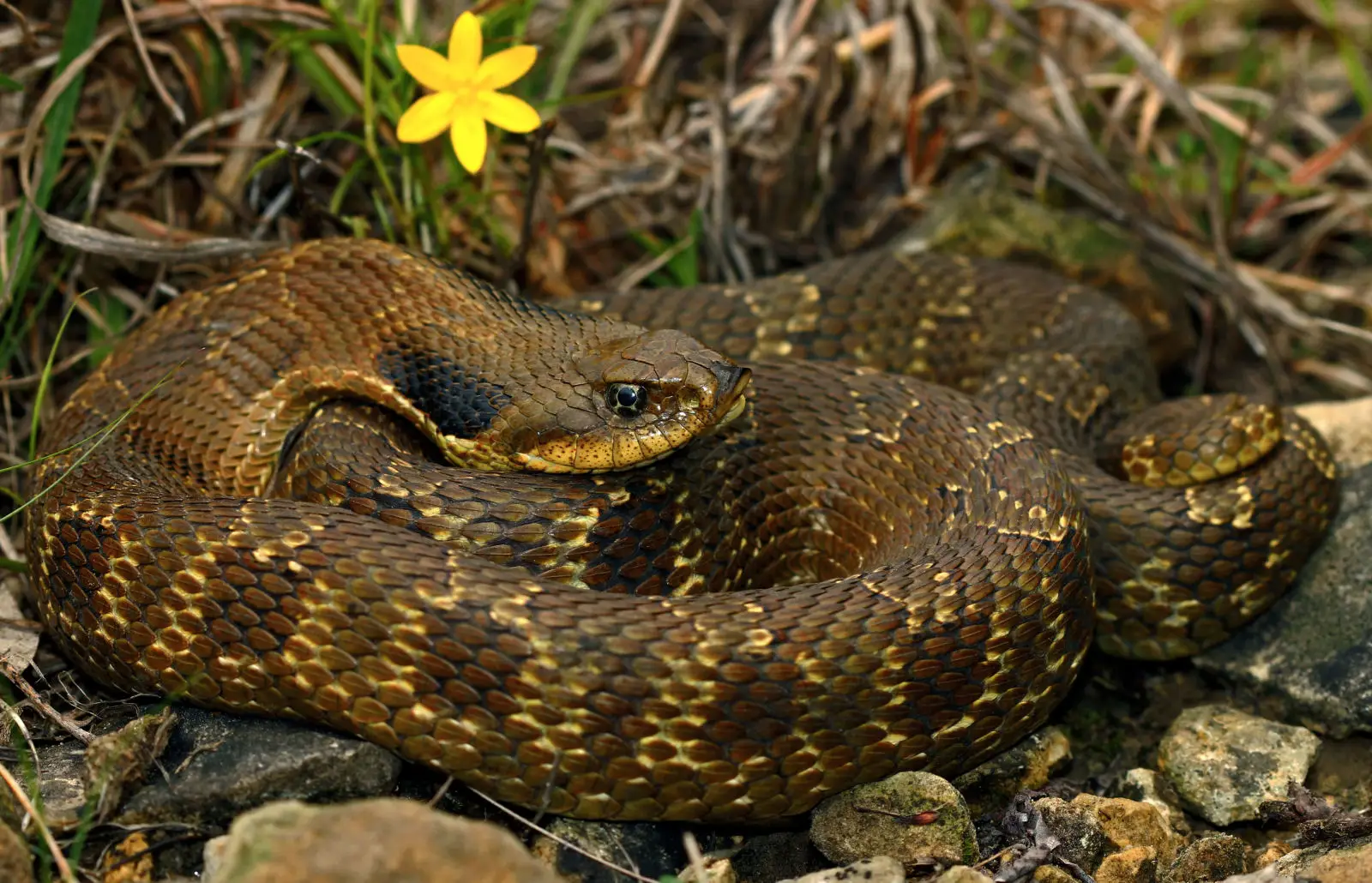
Heterodon nasicus
This Hognose Snake morph guide covers all 10 known alleles, 13 named morphs, and 9 documented combo morphs. Alleles are organised by gene locus and dominance pattern. Tap any allele to expand its full trait description, identification tips, and homozygous risk warnings.
Hognose Snake genetics calculator available
Predict offspring morph probabilities across multiple traits simultaneously
Albino
Allele notation
Removes all melanin (black and brown pigment). Homozygous Albino animals display a bright yellow-orange background with white, cream, or pale yellow saddle marks and no dark pigment anywhere on the body. Eyes are pink to red (lacking melanin in the iris). The most common morph in western hognose captive breeding and one of the first to be established in the hobby. When combined with Axanthic, produces the Snow morph, a near-white animal with soft pink tones and red eyes. When combined with Evans Hypo, produces the Coral morph, a vivid orange-coral animal. Albino participates in numerous combo morphs that form the foundation of the hognose morph market.
Anaconda
Allele notation
Pattern reduction gene with dosage-dependent expression. This locus is correctly classified as incomplete dominant (often called "co-dominant" in the hobby. See note below): heterozygous and homozygous animals look visually distinct. Heterozygous Anaconda (one copy): Significantly reduced and broken dorsal pattern. The typical bold saddle marks of wild-type are replaced by reduced, irregular, or fragmented patterning. The pattern often appears as broken bands, reduced spots, or heavily faded saddles along the dorsum. The lateral and ventral patterns are similarly reduced. Some Anaconda hets retain more pattern than others (variable expressivity), but the reduction is consistent and diagnostic. Homozygous Anaconda / Super Anaconda (two copies): Dramatically reduced pattern approaching near-patternless. Dorsal is largely uniform in color with minimal to absent saddle marks. Most Super Anacondas appear nearly solid in color, with only faint ghosted pattern or scattered small markings. This is one of the most visually dramatic expressions of any hognose mutation. HOBBY TERMINOLOGY NOTE: This locus is called "co-dominant" by most western hognose breeders, using the hobby convention where any mutation with a visually distinct het is labeled "co-dominant." The correct genetic term for a mutation where het and super are distinct (dosage effect) is "incomplete dominant." This file uses the correct terminology. Breeder-facing UI may wish to display "co-dominant (Anaconda / Super Anaconda)" as the label. No health defects (neurological or developmental) have been documented for Super Anaconda in western hognose snakes.
Arctic
Allele notation
Also shown as
Super Arctic
An independent incomplete dominant trait. One copy produces Arctic; two copies produce Super Arctic. Arctic often has a lighter background, increased contrast, outlined dorsal blotches and eyebrow markings. Super Arctic has stronger contrast and a reduced head pattern; dark hatchlings typically lighten with successive sheds. Arctic is distinct from the recessive Axanthic and Lavender traits.
Axanthic
Allele notation
Reduces or eliminates xanthophore pigment (yellow and red pigment). Homozygous Axanthic animals display a silvery-gray to blue-gray coloration with reduced or absent yellow and orange tones. The typical warm orange-brown of wild-type is replaced by cool gray tones. Dark pattern elements (saddle marks) are retained but appear in contrasting dark gray to black against the silvery base. Melanin is fully retained. Eyes remain dark, and the animal can appear quite striking in its silver-gray and black patterning. Axanthic is independent from Lavender (the two produce distinct phenotypes and complementation crosses produce wild-type-appearing double hets). When combined with Albino, produces the Snow morph, as the absence of both melanin and xanthophores results in a near-white animal.
Caramel
Allele notation
Shifts overall pigmentation toward warm brown and caramel tones. Homozygous Caramel animals display a warm golden-brown to caramel background color with brown saddle marks. The typical orange-brown of wild-type shifts to a warmer, more uniform brown-caramel tone with reduction of contrasting dark pigment elements. Melanin is retained but appears in warmer brown rather than dark gray-black tones. Caramel is a distinct locus from Albino, Axanthic, and Evans Hypo. The mutation appears to affect the balance of eumelanin and phaeomelanin, shifting pigmentation toward brown/yellow-brown rather than removing pigment classes entirely. Participates in combo morphs including Lemon Ghost (Caramel + Evans Hypo; exact genetic basis may vary by breeding line) and various Anaconda combos.
Evans Hypo
Allele notation
Reduces melanin production (hypomelanistic). Homozygous Evans Hypo animals display a general lightening and brightening of coloration. Darker pigment elements are reduced in intensity, producing a cleaner, higher-contrast appearance with brighter orange and yellow tones and lighter, less dark-edged saddle marks. Unlike Albino, Evans Hypo does not eliminate melanin; it reduces it, so eyes remain dark and some dark pigment persists in patterning. The "Evans" designation distinguishes this hypomelanistic line from other hypo lines that have been claimed in western hognose. Named after Randy Evans, who established and documented the original line. Community complementation testing confirms this line is genetically distinct from any other hypo lines produced by different breeders (Hypo A x Hypo B = wild-type-looking double hets when from different lines, confirming independent loci). When combined with Albino, produces the Coral morph, a vivid orange-coral animal where Evans Hypo's melanin reduction works synergistically with complete albinism to produce intense warm coloration.
Lavender
Allele notation
Produces distinctive grey-lavender coloration. Homozygous Lavender animals display a soft gray background with lavender, lilac, or purple-gray undertones. The warm orange tones of wild-type are reduced and shifted toward cool lavender and gray. Saddle marks typically appear as darker lavender to brownish-purple against the lighter lavender base. Lavender is independent from Axanthic: the two mutations produce visually distinct phenotypes (Lavender has a warmer purple-gray vs. Axanthic's cooler silver-gray), and complementation testing confirms they are at different loci. Some older sources erroneously conflate Lavender with Axanthic; they are distinct mutations. Lavender participates in combo morphs including Mercury (Axanthic + Lavender, producing an icy pale animal) and various Anaconda combos.
Sable
Allele notation
A recessive Western hognose trait associated with increased dark pigmentation and iridescence. Animals often darken as they mature; pattern may become less distinct. Two copies produce the visual trait; one copy is a nonvisual carrier.
Super Anaconda
Genetic code
Homozygous Anaconda; extreme pattern reduction to completely patternless. Also called Super Conda
Super Arctic
Genetic code
Two copies of the Arctic trait, also called Superarctic. The homozygous expression of an incomplete dominant allele.
Swiss Chocolate
Allele notation
A recessive Western hognose trait associated with dark coloration from hatching and a darker head. Yellow tones and an irregular background can distinguish it from Sable, although appearance varies. Two copies produce the visual trait; one copy is a nonvisual carrier.
Toffee Belly
Allele notation
Modifies belly coloration and patterning. Homozygous Toffee Belly animals display a distinctive yellow-toffee or golden-amber coloration on the ventral surface, replacing the typical black-and-white checkered belly pattern of wild-type western hognose snakes. The dorsal pattern may also show some modification, typically appearing slightly lighter or with modified contrast. The belly modification is the primary and most diagnostic feature of this mutation. The toffee/golden-amber belly color creates a striking visual contrast with the dorsal pattern and is immediately recognizable in visual animals. Toffee Belly is independent from all other listed loci. Creates the Toffeeconda combo when combined with Anaconda, where the modified belly coloration meets the reduced dorsal pattern.
Toffeebelly
Genetic code
Caramel belly coloration
Related guides
Next steps
- Open the genetics calculatorPredict offspring morph probabilities across every trait at once.
- Build a pedigreeGenerate multi-generation pedigrees your buyers can trust.
- Import your spreadsheetBring an existing collection into ReptiDex from a spreadsheet.
- See how records follow the animalEvery record you keep travels with the animal when it changes hands.
Log your hognose snake genetics with ReptiDex
Albino, conda, toffeecorn. Track every recessive and polygenic project with the record-keeping system built for serious breeders.
Get Started Free