The Stress Lick: What Your Crested Gecko Is Telling You (And Why Most Keepers Miss It)
One of my favorite things to do is pop into the gecko room late at night and just watch. The lights are off, the room is quiet, and every enclosure comes alive. Over 250 crested geckos, each one exploring their own little slice of nature. That's the whole reason I keep my geckos bioactively. Not just because it's better husbandry, but because it gives them something real to interact with. Live plants to climb through, real branches to grip, microfauna cycling through the soil beneath them. It's as close to New Caledonia as I can get them from here in Texas, and it creates an environment where I can observe something approaching natural behavior.
I craft each enclosure to the preferences of the individual gecko living in it. When I notice one loves to yeet itself from branch to branch for fun, I make sure it has plenty of branches to launch between. When I notice one prefers scaling up tree trunks the entire night, I add more vertical climbing surfaces. When I see one that's glued to a particular spot without much exploration, I recognize something is off in that environment, and I make adjustments until it feels comfortable moving freely again. That attention to detail, watching what each animal actually does and responding to what it tells me, is what keeps my geckos happy, healthy, and behaving like geckos.
That obsession with observation didn't start with reptiles, though. It started with dogs.
I come from a formal background in dog behavior. Before I ever picked up my first crested gecko, I spent years learning to read dogs. Watching for the freeze, the whale eye, the lip lick, the subtle shift in weight that says "I'm not okay with this." In the dog world, understanding body language isn't optional. It's foundational. Norwegian behaviorist Turid Rugaas spent decades documenting what she called "calming signals," the subtle cues dogs use to communicate stress, discomfort, or a desire to de-escalate. One of the most well-known is the lip lick: that quick, deliberate tongue flick a dog does when it's feeling uneasy. Not the big sloppy lick it gives its food bowl. It's tight, controlled, and almost always paired with a freeze or averted gaze. If you know what you're looking at, it tells you everything about what that dog is feeling.
That training rewired how I observe animals entirely. So when I started keeping crested geckos and logging hundreds of hours watching them interact with their environment, with each other, and with me, I started noticing something eerily familiar.
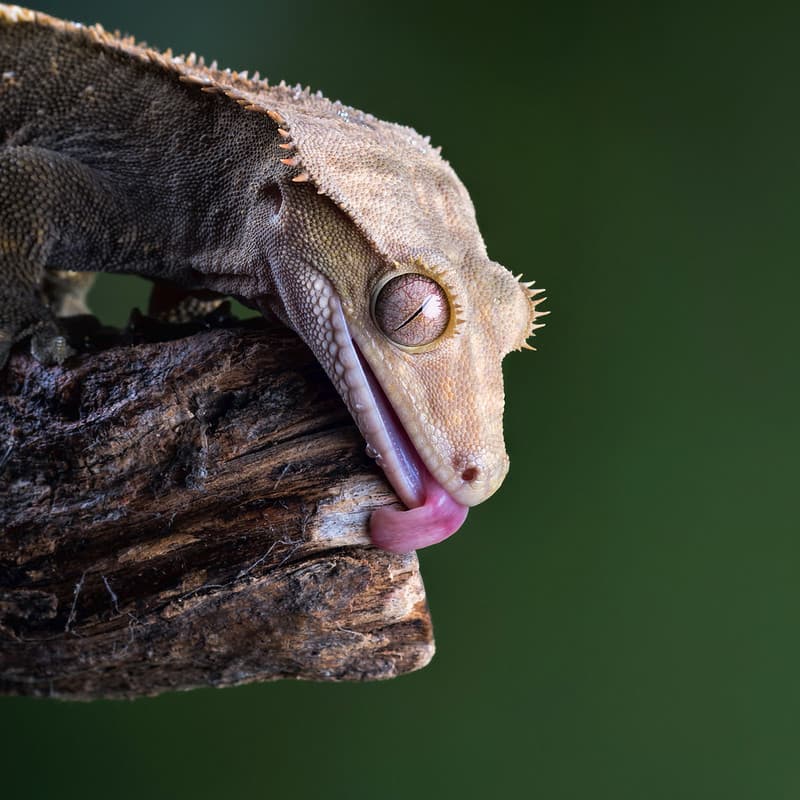
Crested geckos tongue flick. Every keeper knows this. They flick their tongue out to explore surfaces, taste their food, and sample the air. Their Jacobson's organ (the vomeronasal organ in the roof of their mouth) processes chemical information from those tongue flicks the same way a snake's does. It's how they navigate, find food, and identify what's around them. This is normal, healthy, exploratory behavior.
But not all tongue flicks are created equal.
The Exploratory Flick vs. The Stress Lick
After watching my collection in countless interactions, I've identified a clear behavioral distinction between two types of tongue use that I believe every crested gecko keeper should learn to recognize.
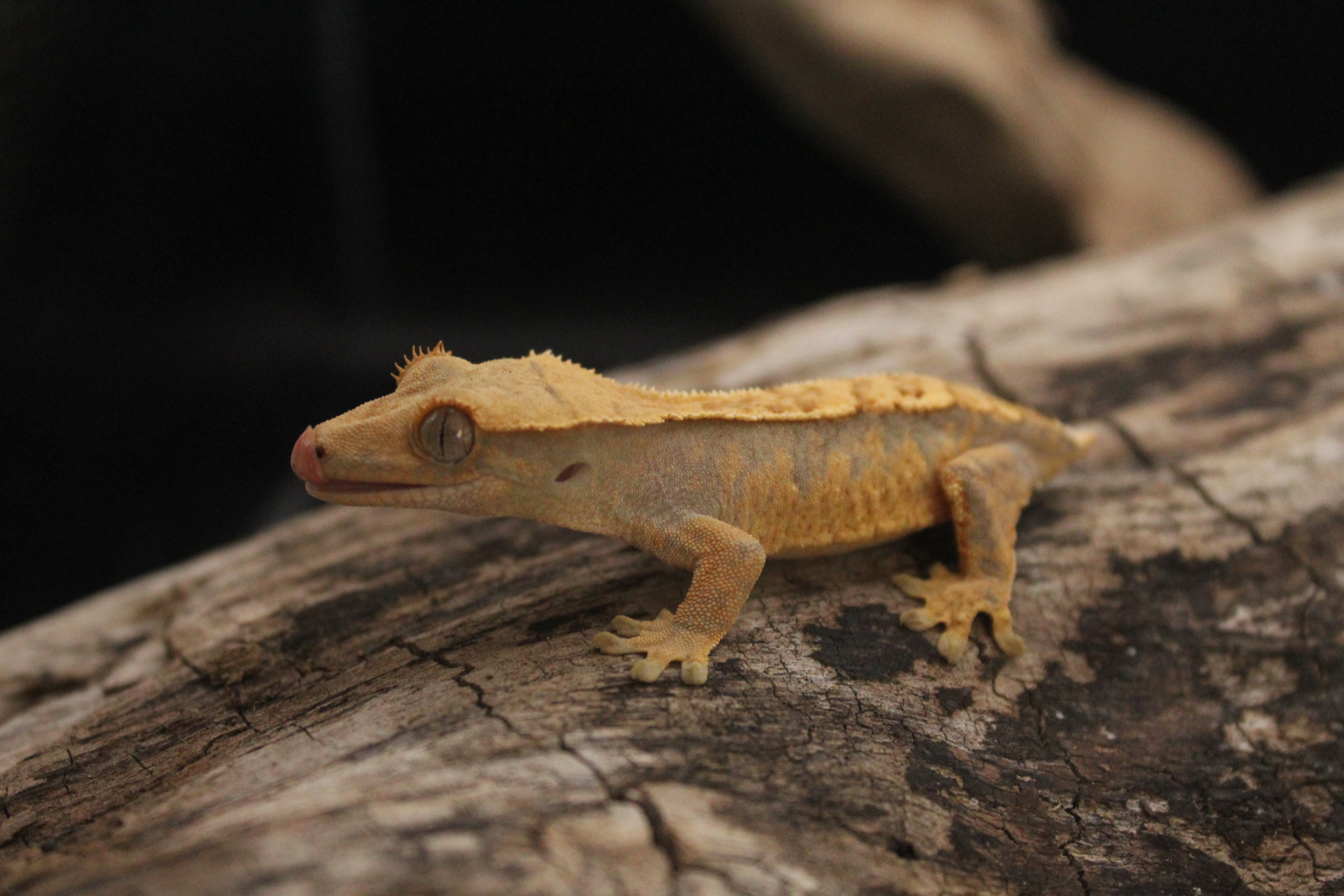
The Exploratory Flick is loose and relaxed. The tongue extends outward, sometimes lazily sweeping the air or a surface in front of the gecko. The body is typically in motion or at least relaxed. The gecko is actively engaging with its environment. Tasting a new branch, investigating a food dish, checking out the glass after you've cleaned the enclosure. This is the equivalent of a dog casually sniffing a fire hydrant on a walk. Relaxed body, relaxed behavior, just gathering information.
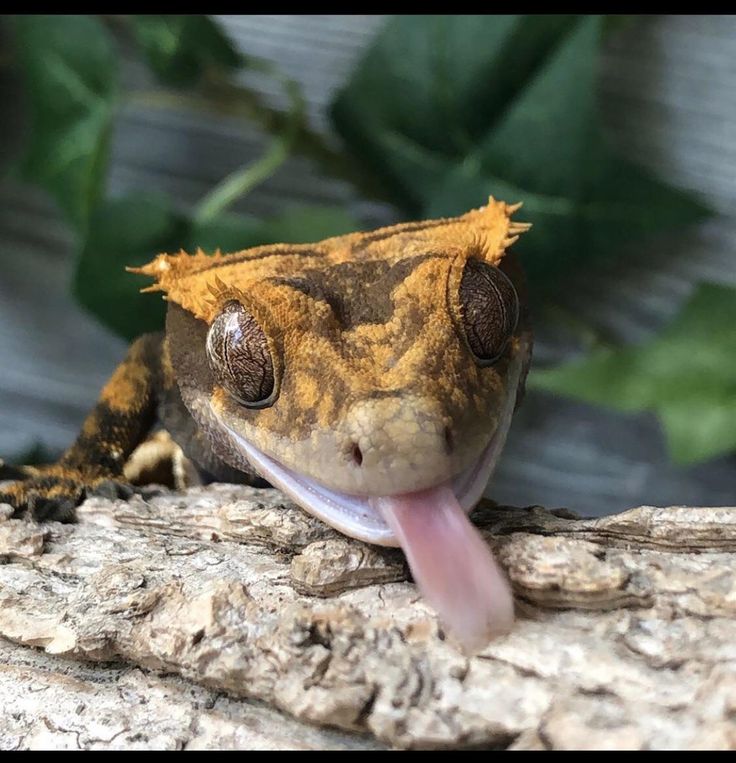
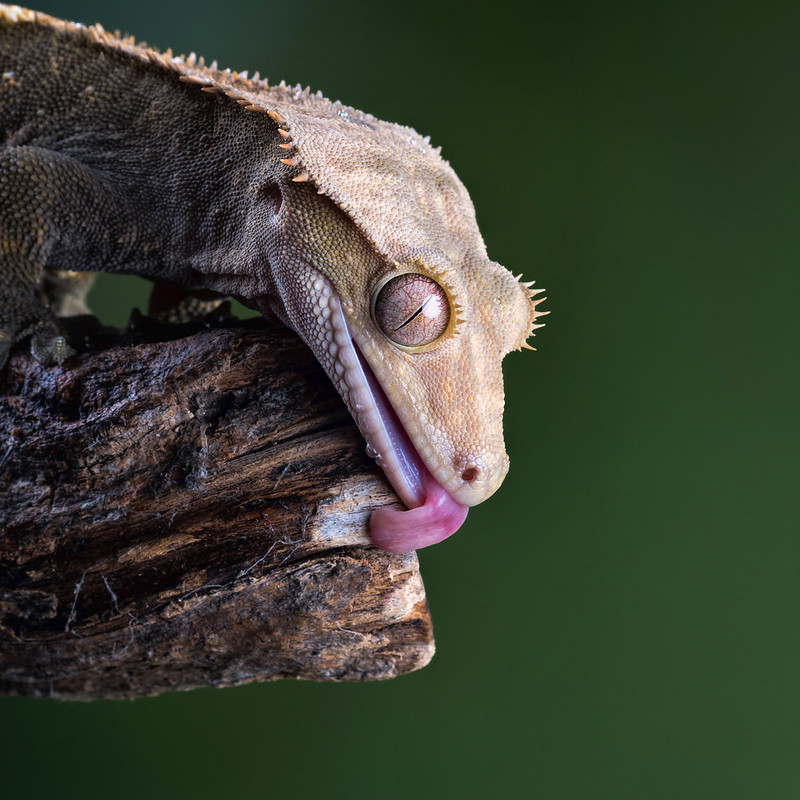
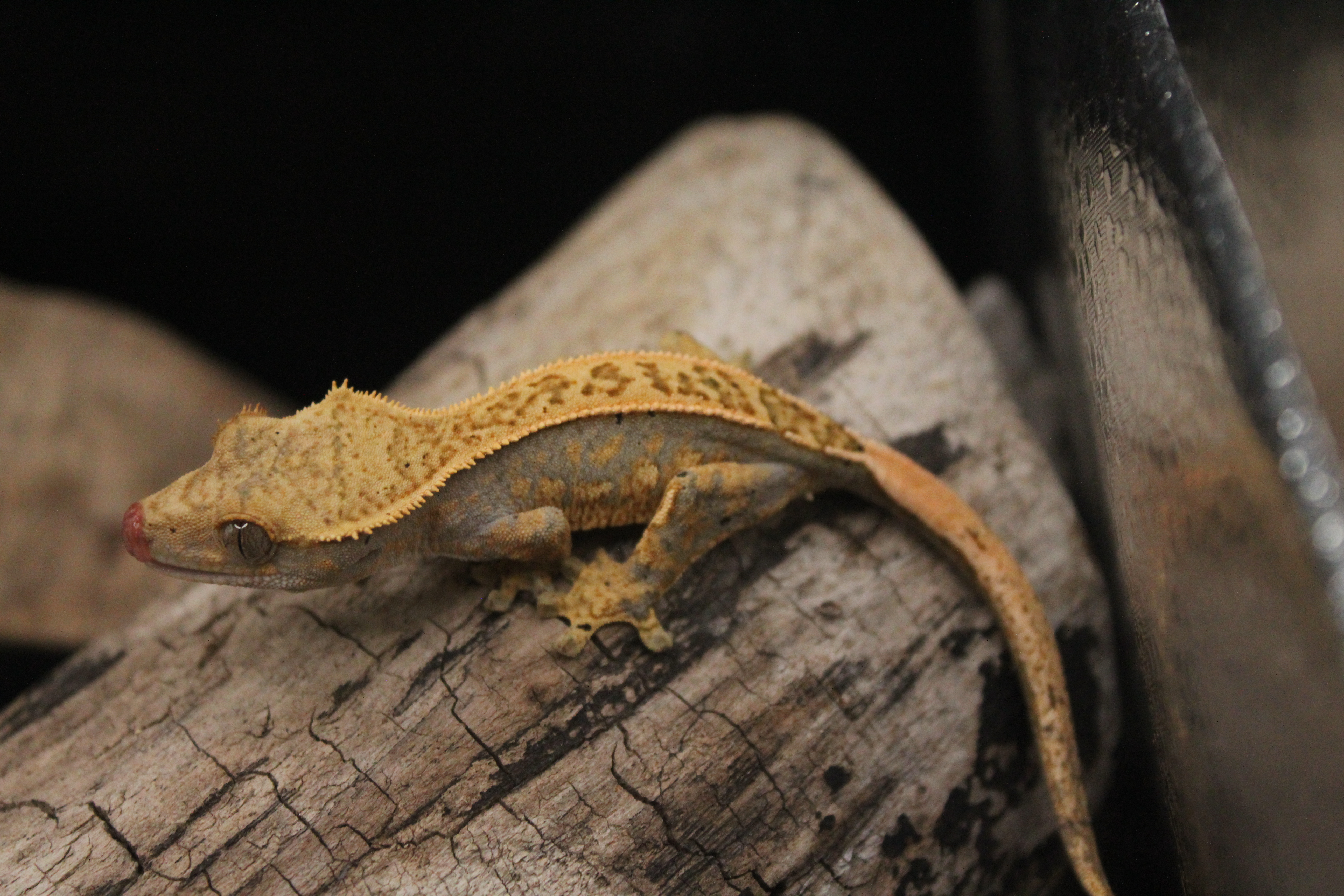
The Stress Lick looks completely different. Instead of a loose outward flick, the tongue tightly licks the nose. It's controlled and repetitive. The gecko will often lick several times in rapid succession, and in many cases the tongue reaches all the way up to the eye. This behavior is almost always accompanied by a freeze. The gecko stops moving entirely, body tense, and begins this tight, deliberate nose-licking pattern.
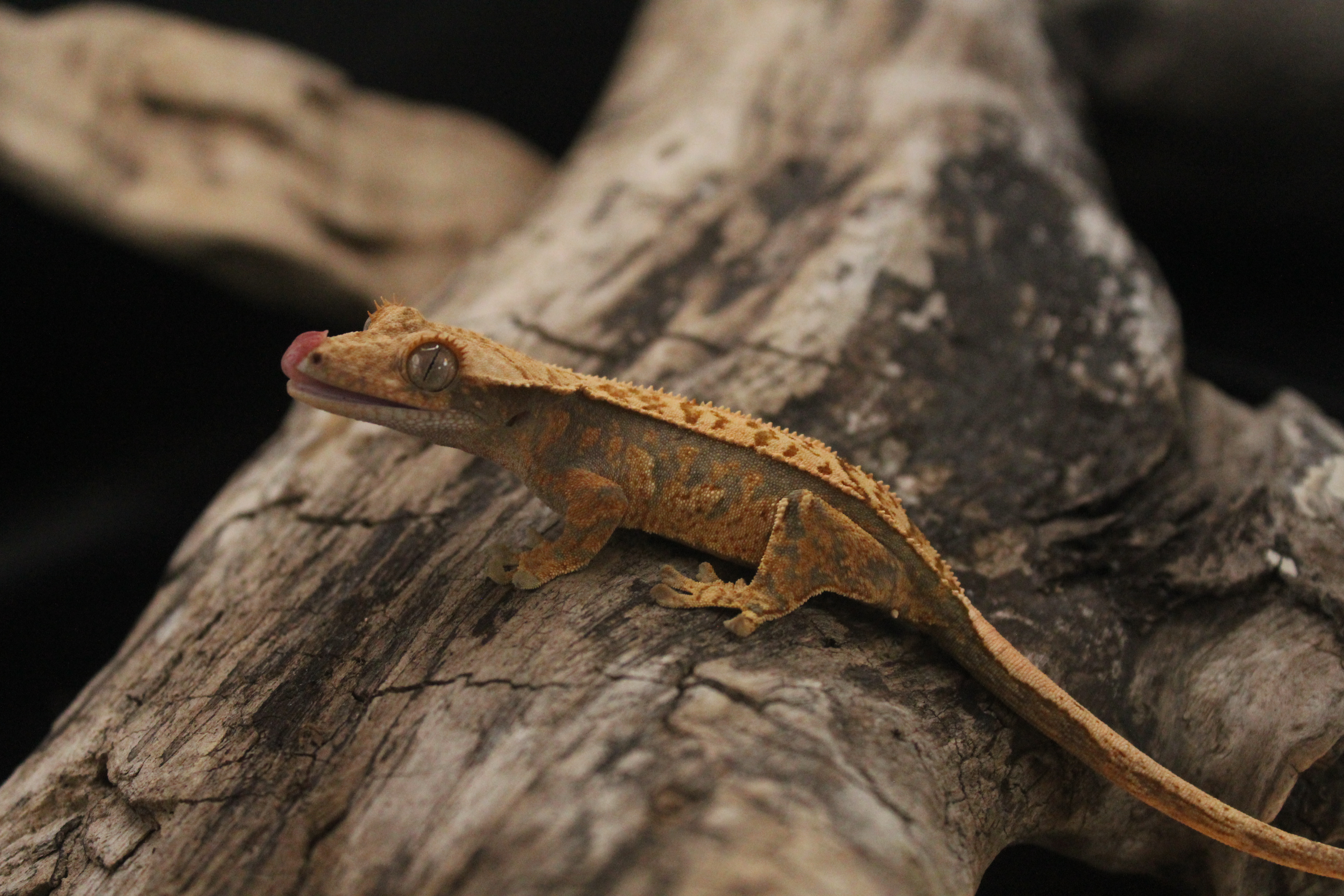
If you've ever watched a dog freeze in place and start rapidly licking its lips when a stranger reaches over its head, you've seen the exact same behavioral formula playing out in a completely different species: freeze plus repetitive, tight licking equals stress.
Why This Matters
Here's the thing. Most care guides will tell you that tongue flicking is normal. And it is. But lumping all tongue behavior into one category is like saying "dogs wag their tails, and that means they're happy." Anyone who has studied dog behavior knows that a high, stiff, rapid wag can mean something very different from a low, loose, full-body wag. Context and mechanics matter.
When we fail to distinguish between an exploratory flick and a stress lick, we miss critical information our geckos are giving us. That frozen gecko tightly licking its nose while you're reaching into the enclosure? It's telling you it's stressed. That gecko doing the same behavior when a new animal is introduced nearby? Stressed. During a cage change in a way that disrupted its sense of security? Stressed.
This doesn't mean you've done something terrible. Stress is a part of life for every animal. Even firing up and down in crested geckos is a stress response. It can be triggered by excitement during feeding or mating just as much as by fear. The key isn't eliminating all stress. The key is recognizing it so you can make informed decisions about how you handle, house, and interact with your animals.
Reading the Whole Picture
Just like with dogs, body language is best read as a cluster of signals rather than any single behavior in isolation. When I see the stress lick in one of my geckos, I'm also looking at the rest of the picture: Is the body frozen or relaxed? Are the eyes wide and tracking me, or calm? Is the gecko puffed up, flattened, or neutral? Is it vocalizing? Has it fired up suddenly?
A gecko that's frozen in place, tightly licking its nose up to its eye, and tracking your hand with wide eyes is painting a very clear picture. A gecko that's casually perched on a branch and gives a loose tongue flick toward the air while slowly moving its head? Completely different story.
The more time you spend observing (really observing, not just glancing) the more fluent you become in your gecko's language. This is no different from the dog owner who learns to see the almost imperceptible lip lick their dog gives when Uncle Jerry leans in for an unwanted hug. The behavior was always there. You just have to learn to see it.
What You Can Do
If you notice the stress lick, here are some practical steps:
Give the gecko space. If you're handling and you see this behavior, calmly return the gecko to its enclosure rather than pushing through the interaction. Forcing handling on a visibly stressed animal erodes trust over time, the same way ignoring a dog's calming signals teaches it that communicating politely doesn't work.
Evaluate the environment. Is the enclosure set up with adequate cover and climbing opportunities? Are the temperature and humidity within range? Is there a neighboring gecko causing visual stress? Sometimes the stress lick shows up consistently in a specific context, and that context is your clue to what needs to change.
Adjust your approach. Crested geckos are prey animals. Reaching in from above mimics a predator. Slow, lateral movements and letting the gecko come to you can make a significant difference. If a gecko consistently stress-licks when you open the enclosure, consider modifying how and when you interact.
Document what you see. If you're a breeder or a serious keeper, noting behavioral patterns alongside your husbandry records adds another layer of data to your program. A gecko that chronically shows stress signals may be telling you something about its pairing, its enclosure, or its overall wellbeing that the numbers alone won't show. Tools like ReptiDex make it easy to log observations alongside weight, feeding, and breeding data so you can spot patterns over time.
Bridging the Gap
The reptile hobby has made incredible strides in understanding genetics, nutrition, and husbandry. What we haven't spent nearly enough time on is behavior. In the dog world, understanding body language is day one material. It's how you build trust, prevent bites, and create an environment where the animal feels safe. There's no reason that same principle shouldn't apply to every animal we keep.
Crested geckos may not wag their tails or pin the...