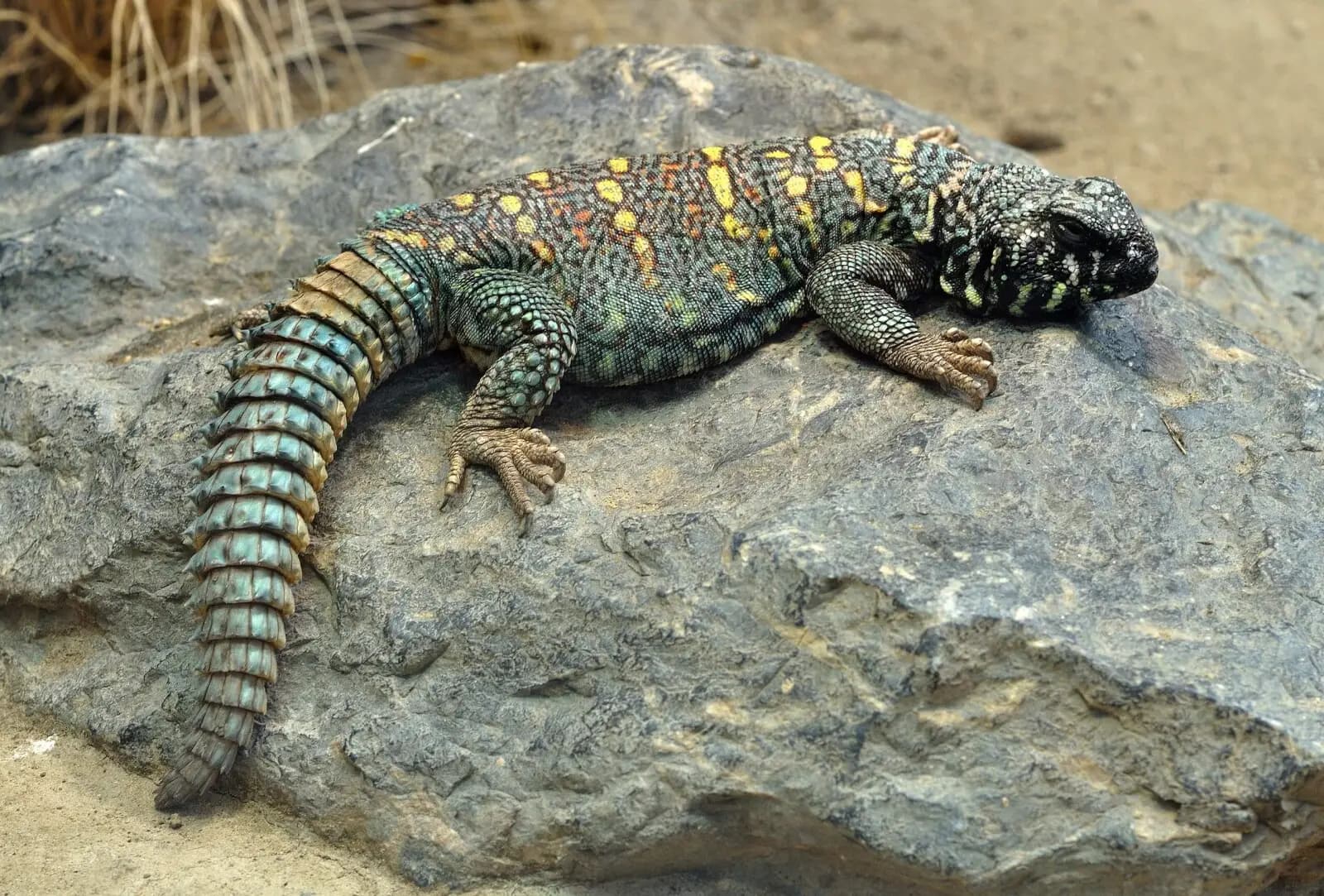
Care guide
Uromastyx
Uromastyx spp.
- Adult size
- 10-18 inches (25-46 cm) depending on species
- Lifespan
- 15-25 years
Overview
Uromastyx are herbivorous lizards from North Africa and the Middle East, known for their spiny tails, colorful patterns, and basking behavior. They are diurnal, heat-loving lizards that thrive in hot, arid environments and make fascinating pets for keepers who can provide very high temperatures.
Ambient Temp
80-90°F (27-32°C)
Basking Spot
110-130°F (43-54°C)
Night Temp
70-80°F (21-27°C)
Humidity
20-35%
UVB
Required: strong 10.0-12.0 UVB covering most of enclosure; may need two bulbs
Lifespan
15-25 years
Enclosure Sizes by Life Stage
| Life Stage | Minimum Enclosure Size |
|---|---|
| Hatchling0–3 months | 20-gallon long (30x12x12") |
| Juvenile3–12 months | 40-gallon breeder (48x18x18") |
| Adult12+ months | 4x2x2 ft or larger |
Housing
- Enclosure type
- Terrestrial PVC or wood enclosure; retains heat better than glass; large footprint required
- Substrate
- Sand, sand/soil mix, or excavator clay (4-6 inches deep). They burrow extensively. Tile at basking area helps maintain heat.
- Hides
- Multiple hides; snug burrow-style hides preferred; dig boxes appreciated
- Notes
- Minimum 4x2x2 feet for adults. Provide large basking area, multiple hides, and open space. They need more length than height. Use PVC or wood enclosure to retain heat better than glass.
Temperature
- Ambient / cool side
- 80-90°F (27-32°C)
- Basking spot
- 110-130°F (43-54°C)
- Nighttime
- 70-80°F (21-27°C)
- Heating method
- Basking bulb, deep heat projector, or halogen bulb; multiple heat sources may be needed
Humidity & Lighting
- Humidity range
- 20-35%
- Maintenance
- Desert species requiring LOW humidity. Ensure good ventilation and avoid misting.
- UVB
- Required: strong 10.0-12.0 UVB covering most of enclosure; may need two bulbs
- Photoperiod
- 14 hours on / 10 hours off; longer photoperiod supports healthy basking behavior
- Lighting notes
- REQUIRES strong UVB 10.0-12.0 covering most of enclosure. May need two bulbs. Also needs bright white basking bulb. UV output is critical for these desert species.
Feeding
- Staple food
- Dark leafy greens (collard, turnip, mustard greens), seeds, lentils
- Variety
- Dried flowers, commercial Uromastyx mixes; NO insects, fruit, or spinach
- Frequency
- Feed fresh salad daily or every other day for adults. Juveniles need daily feeding. Remove uneaten food.
- Supplements
- Dust vegetables with calcium (without D3) 2-3x per week. They can synthesize D3 from UVB. Multivitamin 1x per week.
- Notes
- STRICT HERBIVORE: Feed dark leafy greens (collard, turnip, mustard greens), seeds, lentils, dried flowers. NO insects, fruit, or spinach. Many commercial mixes available.
Water & Hydration
- Water bowl
- Provide water dish but they rarely drink; most hydration from vegetation
- Notes
- Provide water dish but they rarely drink. Most hydration comes from vegetation. Mist vegetables before feeding.
Handling
- Disposition
- Generally docile once settled; spiny tail used for defense; warm up before handling
- Recommendations
- Generally docile once settled but can be skittish. Handle 1-2 times per week. Their tail is spiny and used for defense. Move slowly and let them warm up under basking light before handling.
Common Health Issues
Metabolic bone disease from insufficient heat/UVB, impaction, respiratory infections from low temps, and vitamin deficiencies from poor diet.
Special Notes
Uromastyx can live 15-25 years. Multiple species vary in size and color. They NEED very high temperatures - this is not negotiable. May brumate in winter. Extremely food-motivated. Males are territorial and more colorful. They defecate urates (white solid uric acid) instead of liquid urine to conserve water. One of the few reptiles that can thrive on a completely herbivorous diet. High heating costs should be considered.
Next steps
Start your records
Track your Uromastyx with ReptiDex
Track your breeding program, generate pedigrees, and share records with buyers.
Get Started Free